Posts

Showing posts with the label 17 May

A shared responsibility.

Image
  Resilience means that digital systems are designed to withstand disruption, adapt to changing conditions, and recover quickly when something goes wrong . It also means building in backup systems, international standards and cooperation across borders, so that a local failure does not become a global one.  We need to build resilience into digital systems from the start — in design, operation and recovery. But strengthening digital lifelines is not just a technical task. It is a shared responsibility that involves policy choices, investment, international cooperation and public awareness. The observance of the  World Telecommunication and Information Society Day is an invitation to look differently at the everyday technologies we take for granted, recognizing the people and partnerships that keep them running across the United Nations and the countries they serve. WTISD-2026

The human side of connectivity.

Image
  For people on the move, resilience is not an abstract concept. It is the difference between being able to reach loved ones or being cut off. It determines whether early warning messages arrive in time, whether hospitals stay connected, and whether communities can coordinate relief and recovery. For many in the United Nations system and the diplomatic community, digital infrastructure is part of professional life. Negotiations, reporting, coordination with capitals and field offices all rely on secure, stable connectivity. A resilient digital environment supports dialogue, diplomacy, international cooperation and multilateral action.  WTISD-2026

Think about the invisible systems that make the day possible.

Image
  Help make the invisible visible. Tell us which digital lifelines play the greatest role in your work with the United Nations. WTISD-2026

Our lives depend on something we rarely see but constantly rely on: digital lifelines.

Image
This year’s World Telecommunication and Information Society Day , observed on 17 May , shines a light on those essential systems under the theme “ Digital Lifelines: Strengthening resilience in a connected world .” Chosen by the Member States of the International Telecommunication Union (ITU) , the United Nations agency for digital technologies, the theme asks a simple question with far reaching consequences: How do we make sure the digital networks and services we depend on are there when we need them most? When the alarm goes off in the morning, most of us do not think about the invisible systems that make the day possible . We check the weather on our phone. We message family across borders. We tap a card to pay for transport or coffee. We join an online meeting, book a medical appointment, follow the news, or call for help in an emergency.

Marking the anniversary of the signing of the first International Telegraph Convention and the creation of the ITU.

Image
May 17th marks the anniversary of the signing of the first International Telegraph Convention and the creation of the International Telecommunication Union (ITU).

The impacts of the Gender Digital Divide.

The effects of digital exclusion are interconnected, limiting not just individual potential, but also the resilience of communities and the performance of economies. On individuals : When women and girls gain digital access and skills , they unlock educational, professional, and social opportunities, from becoming entrepreneurs to obtaining essential health, financial and government services. On communities : Inclusive digital participation fosters stronger, more resilient communities by ensuring diverse perspectives and locally relevant solutions. When women and girls benefit from and contribute to digital transformation , communities are strengthened by increased innovation and greater social cohesion. On economies : Equality for all women and girls fuels economic growth by driving diversity, innovation, and productivity. According to the IMF, narrowing gender gaps in labor markets could boost GDP by up to 8% in emerging and developing economies.

Take action for digital gender equality!

Image
  To help close the gender digital divide, we invite you to: Promote gender-responsive policies  that enable women’s active participation in the tech sector Ensure equal access to digital skills  and training for women and girls Foster global partnerships  across governments, international organizations, the private sector, and civil society to  scale impact Check out the Advocacy toolkit to support the campaign Find resources and opportunities to mark WTISD-25 and help close the digital gender gap.  Get involved

Closing the gender digital divide unlocks opportunity for all.

Image
Digital technologies have the power to accelerate progress across every sector of society, yet that potential remains out of reach for many. Of the 2.6 billion people still unconnected, the majority are women and girls . The  Gaps in access and affordability of the internet and digital devices , as well as limited digital skills , continue to hinder the participation of women and girls in today’s economy and in shaping tomorrow’s digital solutions . Bridging this divide is essential to unlocking new pathways for economic growth, innovation, and sustainable development . The  World Telecommunication and Information Society Day (WTISD) 2025 highlights the pressing need to advance digital gender equality , so that women and girls everywhere can also benefit from and contribute to digital transformation. As the world marks 30 years since the Beijing Platform for Action , WTISD-25 is a critical moment to accelerate collective action that ensures digital transformation delive...

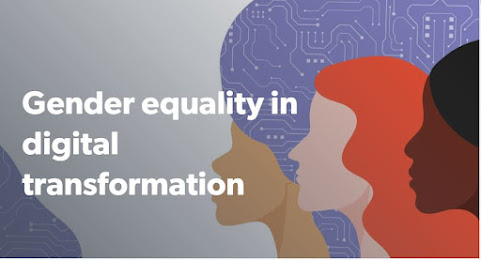
Why gender equality in digital transformation matters?

Image
Despite progress, inequality remains a barrier to digital inclusion . According to Facts and Figures 2024 : 70% of men use the Internet globally , compared to 65% of women, a gap that leaves 189 million more men online than women worldwide. While the digital gender gap has narrowed in many developed countries, it has widened in Least Developed Countries (LDCs), where only 29% of women are using the internet compared to 41% of men. Gaps persist not only in access, but also in affordability, digital skills , participation in STEM , and leadership in the tech sector . These gaps not only disadvantage women and girls, they also hinder economic growth, innovation in countries around the world, and the achievement of the Sustainable Development Goals (SDGs) .  

ITU is observing 160 years of advancing global connectivity and fostering international cooperation.

Image
The 160 years are not only a milestone for ITU, but a commemoration of the shared progress we’ve made in creating a connected, inclusive world. Watch the message from Doreen Bogdan-Martin, Secretary-General of the International Telecommunication Union, for ITU's 160th anniversary.

Reflecting the growing significance of the Internet and digital technologies.

Image
First established as World Telecommunication Day, the international observance has been held annually on 17 May since 1969. It was formally instituted by the 1973 ITU Plenipotentiary Conference in Malaga-Torremolinos through Resolution 46. In 2006, it was merged with World Information Society Day to become World Telecommunication and Information Society Day ( WTISD ), reflecting the growing significance of the Internet and digital technologies.  The observance aims to raise awareness of the power of the Internet and other technologies to improve lives and bridge the digital divide . Learn more